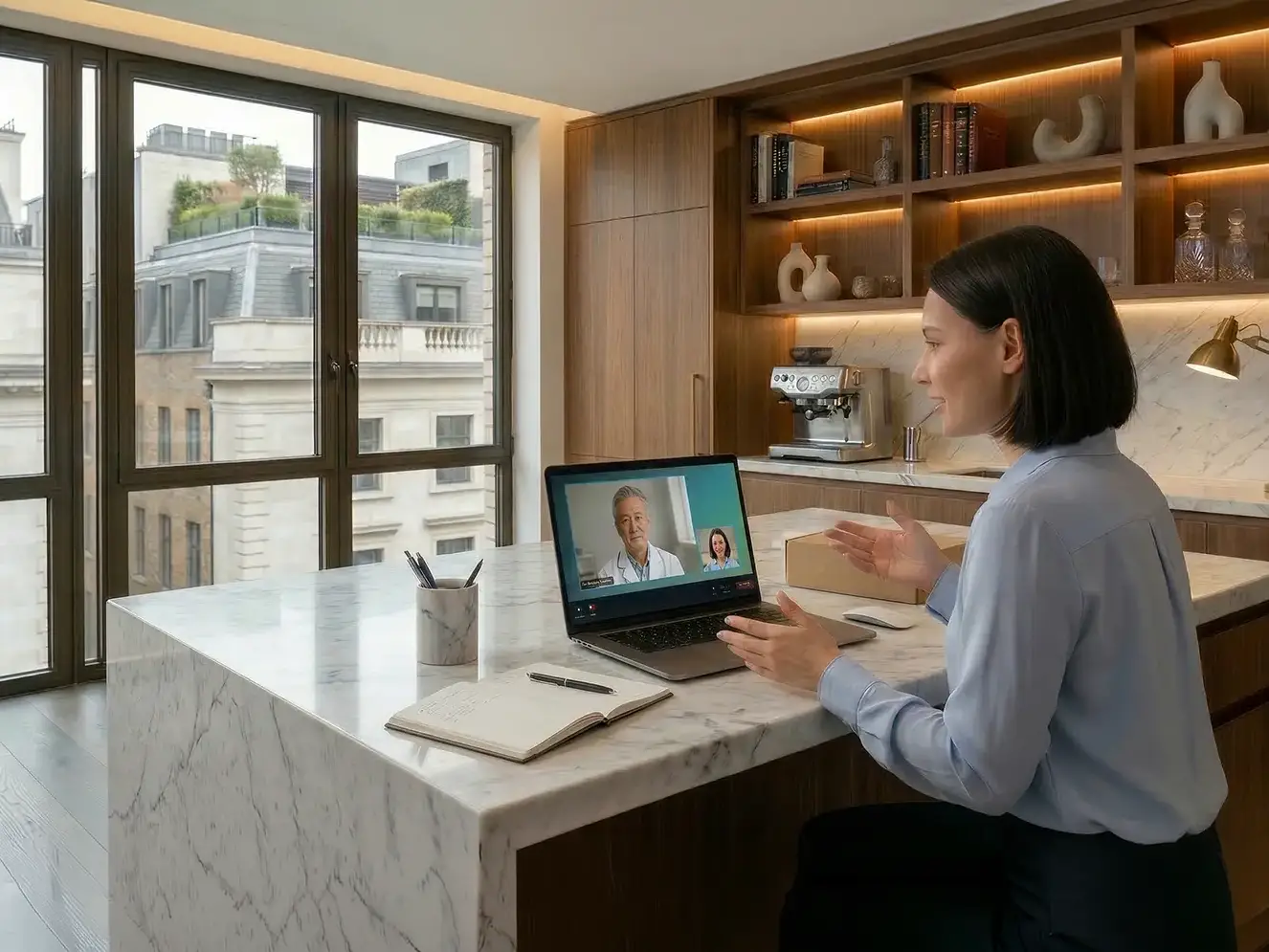
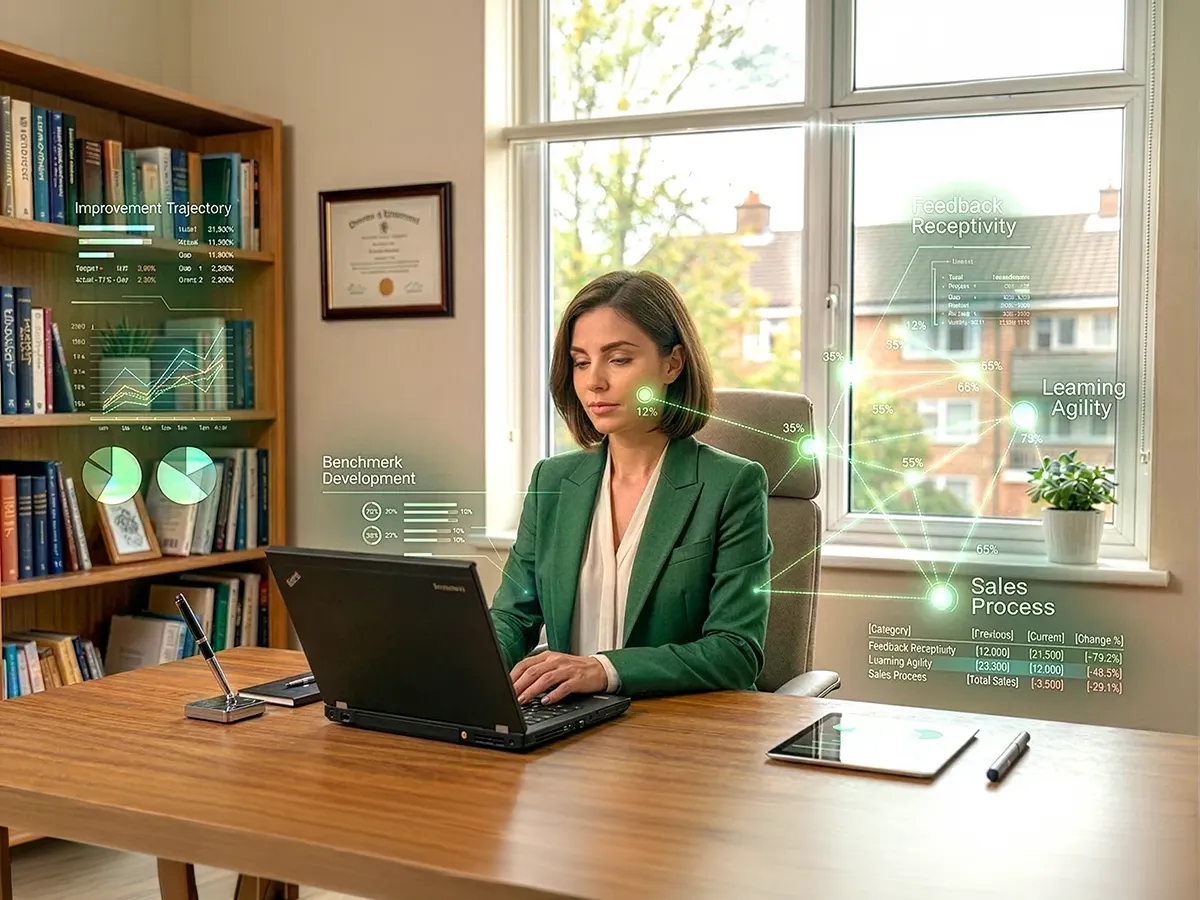
Talent Acquisition pros can now introduce behavioral data into the pharma sales hiring process. Know who will develop before day one.
Get a Demo

The Behavioral Data Talent Acquisition Needs. The Confidence Hiring Managers Want.
Quantified fits directly between the recruiter screen and the hiring manager interview. Candidates receive a 72-hour window to practice a defined sales scenario using the AI roleplay platform. There are no limits on attempts. The AI delivers specific feedback after each session. When the window closes, the hiring manager receives a structured data package before the interview begins.
This is not a separate assessment track. It’s a behavioral layer that makes every hiring manager interview more informed and more efficient.
After passing the recruiter screen, candidates receive access to a defined sales scenario and 72 hours to practice. There is no limit on the number of sessions. Each attempt ends with AI-generated feedback that is specific, actionable, and immediately available.
What this reveals: candidates who complete multiple sessions and show improvement are demonstrating learning orientation before they ever speak to a hiring manager. Candidates who disengage after one or two attempts are providing information through that choice. Both data points matter.
The platform is built for pharma sales contexts, and scenarios are customized to the specific role being hired, not applied generically. An oncology sales rep simulation looks different from a cardiovascular one. A key account director scenario is built around different skills than an entry-level rep conversation. Whether the role spans one therapeutic area or a dozen, the scenario reflects the actual situations that candidate will encounter in the field. Every candidate in a given cohort practices the same scenario under the same conditions, creating a consistent basis for comparison across the full pool.

Before the hiring manager interview, Quantified automatically compiles each candidate’s simulation data into a structured report. The hiring manager enters the conversation already knowing what to probe.
The report includes five components: practice count (total sessions completed), improvement trajectory (performance delta across attempts), final assessment score (composite on the last attempt), identified strengths (behaviors demonstrated consistently), and development areas (skill gaps flagged by the AI).
This changes the interview from a baseline assessment into a targeted conversation. Instead of spending 20 minutes establishing capability, the hiring manager can spend those 20 minutes on the development areas that will determine whether this rep succeeds in their first 90 days. Preparation time drops. Decision confidence goes up.
Hiring managers who use the data package consistently describe the interview as qualitatively different: more focused, more predictive, and more honest on both sides. Critically, the data surfaces dimensions the resume never could: how well a candidate engages when the conversation gets difficult, whether they can build rapport while staying on message, and whether they can advance a conversation toward a next step rather than stalling at the objection. These are the behaviors that separate average performers from top-quartile reps, and they show up in the simulation long before the first day on the job.

A common concern when adding a pre-hire step is drop-off. Will candidates engage? Will it feel like a burden that lengthens an already competitive recruiting process?
When the simulation is framed as preparation (an opportunity to practice before the hiring manager conversation), engagement is meaningfully higher than standard pre-hire assessments. Hiring teams typically see 75% of candidates completing the simulation within the 72-hour window.
The framing is deliberate: candidates are told this is a chance to get comfortable with the conversation before the interview, not a test they can fail. Candidates with high learning orientation consistently engage more. Which is precisely the signal you’re looking for.
Candidates who complete the simulation tend to show up to the hiring manager interview better prepared and more confident, a side effect that benefits the organization regardless of outcome.

Built for Pharma. Backed by Data. Trusted by Commercial Leaders.
The organizations that hire the best pharma sales teams aren’t just sourcing better. They’re evaluating better. Quantified gives talent acquisition teams a repeatable, data-driven signal that the standard interview process was never designed to produce.
From configuring the first scenario to delivering the first data package to a hiring manager, implementation is measured in days, not quarters. The scenario is built once, deployed consistently, and generates behavioral data on every candidate who completes it, at scale and without adding to recruiter or hiring manager workload.


AI-powered talent assessment for pharma sales uses a structured simulation scenario to evaluate candidate coachability and learning speed during the hiring process. Candidates practice a real sales conversation with an AI counterpart, receive specific performance feedback after each attempt, and can practice multiple times within a defined window. Their behavioral data, including practice frequency, improvement trajectory, and final performance score, is delivered to the hiring manager before the interview. The result is a coachability signal that standard interviews cannot produce.
Quantified is designed to sit between the recruiter screen and the hiring manager interview as a discrete step that requires no changes to ATS workflows, offer letter processes, or interview panel structures. After a candidate passes the recruiter screen, they receive an invitation to practice a defined scenario within a 72-hour window. Candidate data is compiled automatically. The hiring manager receives a structured report before their scheduled interview. Configuration of the scenario takes days, not months.
No. Quantified is a supplemental tool, not a replacement for any part of your hiring process. The decision to advance a candidate remains entirely with the hiring team. The simulation data provides an additional layer of insight: how candidates engage, how they respond to feedback, and how they handle a conversation that doesn’t go as scripted. These are signals the resume and structured interview cannot produce on their own. It is one input among several, positioned to make the hiring manager conversation more informed, not to serve as a mandatory cutoff or automated decision point.
After the recruiter screen, candidates receive an invitation to practice a sales scenario using the Quantified platform. They have 72 hours and unlimited practice attempts. After each session, the AI delivers specific, actionable feedback. The experience is framed as an opportunity to prepare for the hiring manager conversation, not a test to pass or fail. Hiring teams typically see 75% of candidates complete at least one session within the window.
Coachability is measured through behavioral observation across multiple attempts, not a single assessment point. Quantified captures practice frequency (how many sessions a candidate completed), improvement trajectory (how much their performance changed across attempts), and final assessment quality. A candidate who practices 10 times and shows consistent score improvement is demonstrating a different learning orientation than one who completes a single session. Both are data. Together, they form a coachability signal that the standard interview was never designed to surface.
Quantified is built for industries where sales rep performance is high-stakes and communication precision matters: pharmaceutical, biotechnology, biopharmaceutical, and medical device. These industries require reps who can navigate compliant HCP conversations, handle complex objections, and adapt messaging quickly. Coachability is especially critical in these environments because product and market conditions change frequently and rep development must keep pace.
Equal employment considerations are a legitimate priority for talent acquisition teams, and Quantified is designed to support, not complicate, compliant hiring practices. The simulation is deployed as a supplemental insight tool, not a screening gate. Every candidate in a cohort completes the same scenario under the same conditions, creating a consistent and documented evaluation baseline. No candidate is advanced or eliminated based solely on simulation data. The output informs the hiring manager conversation; it does not make the hiring decision. Organizations that have implemented Quantified position it explicitly as an additional tool to gain deeper behavioral insight alongside their existing process, surfacing how candidates engage, build rapport, and handle real sales situations, rather than relying on self-reported skills or interview performance alone.