The 5 Big Risks Pharma Takes When Recording Live Sales Conversations
Download Now


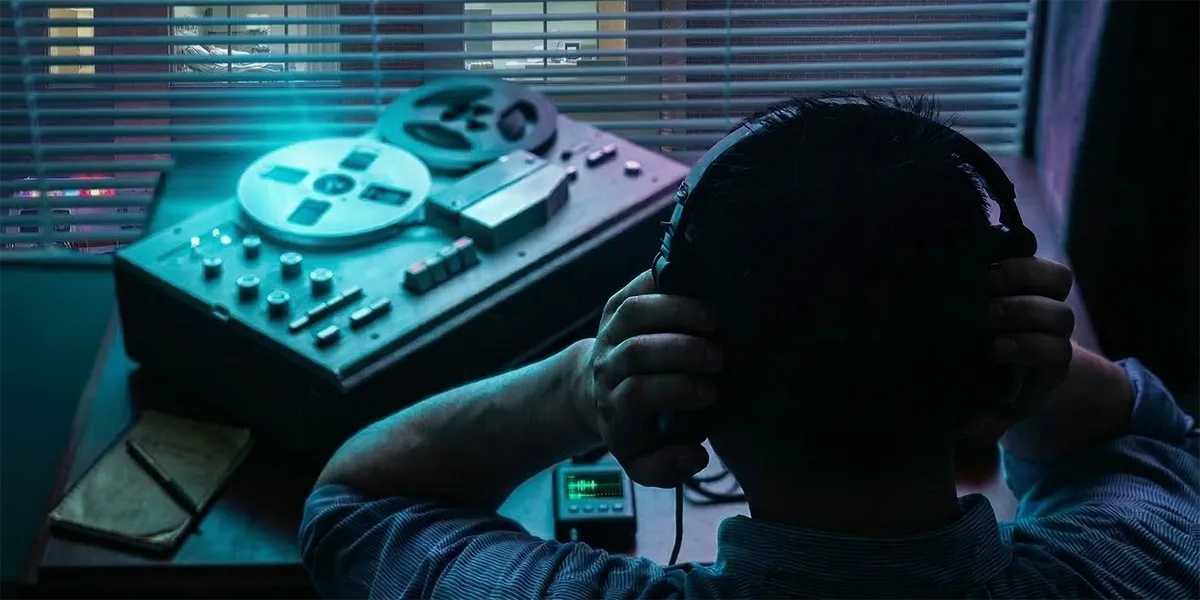

Recording live physician conversations promises visibility. But when trust is the cost, the trade-off rarely works in your favor.
Call recording in pharma sales refers to the practice of capturing live conversations between field representatives and healthcare providers (HCPs) using AI-powered tools that generate transcripts, summaries, and coaching insights. While the technology is positioned as a coaching accelerator, it introduces a set of risks that many commercial organizations underestimate, particularly around physician trust and long-term access.
HCP access is no longer a given. It is a hard-earned privilege that has been eroding for more than a decade. Data from the Veeva Pulse Field Trends Report (the largest industry benchmark of its kind, analyzing over 600 million HCP interactions annually) shows that only 45% of physicians are now accessible to biopharma companies, with more than half restricting engagement to three or fewer companies. In high-stakes therapeutic areas, securing even five minutes with a specialist is the result of months of relationship-building and consistent value delivery.
That access is fragile. And the introduction of live recording into the clinical setting can break it faster than most teams realize.
When a physician knows the conversation is being recorded, the dynamic shifts. This is not speculation. It is a well-documented psychological phenomenon known as the Hawthorne Effect, where individuals alter their behavior simply because they are aware of being observed. The American Medical Association has published guidance on outside observers in clinical encounters, acknowledging the impact that third-party presence or surveillance has on the quality of physician-patient and physician-rep interactions.
Organizations often describe their recording tools as "passive" or "non-intrusive," framing them as simple coaching aids. From the physician’s perspective, the experience is anything but passive.
Clinical questions become narrower and safer. Conversations shift from collaborative to transactional. The spontaneous "what-if" scenarios, where the most meaningful clinical exchange happens, disappear entirely. Competitive references, which physicians often share freely in trusted conversations, become guarded. The result is a thinner, less valuable interaction for both parties.
This dynamic is especially damaging in pharmaceutical sales environments where clinical depth and trust are the foundation of productive HCP engagement. When reps cannot have candid conversations, they lose the ability to address real objections, understand formulary concerns, and provide the clinical context that differentiates them from a digital resource.
Beyond the individual physician, the risk is structural. Major health systems across the U.S. are implementing strict no-recording policies to protect provider privacy and institutional liability. These policies apply broadly, covering not just patient interactions but also pharmaceutical and medical device sales calls conducted on hospital or clinic premises.
For commercial organizations that have built their field oversight strategy around live recording, this creates a serious blind spot. The accounts where visibility matters most are often the first to restrict it. Large academic medical centers, integrated delivery networks, and multi-hospital systems tend to adopt these policies earliest, meaning your highest-value targets are the ones you lose visibility into first.
If your coaching and compliance infrastructure depends on recorded calls, a single policy change at a major health system can eliminate your data pipeline overnight in that account. That is not a scalable oversight model. Organizations that run certification in advance of field deployment avoid this dependency entirely because their readiness data is generated before the rep enters the clinic, not during the visit.
The "Trust Tax" is the cumulative cost that recording imposes on the relationship between your field team and the physicians they serve. It operates on three levels.
Individual physician behavior. As described above, physicians become more guarded. The quality of conversation degrades, which reduces the clinical value your reps can deliver. Over time, this erodes the physician’s perception of the rep as a trusted resource.
Institutional access restrictions. Health systems that adopt no-recording policies create hard barriers. Your team either complies (and loses the data) or pushes back (and risks the relationship entirely).
Rep confidence and authenticity. Representatives who know their conversations are being recorded and scored also change their behavior. They default to scripted messaging, avoid clinical depth, and prioritize compliance over connection. The irony is that recording, intended to improve performance, often produces more rigid and less effective conversations. Research on what pharma gets wrong about AI training highlights why surveillance-based models consistently underperform development-based ones.
The compounding effect is that visibility gained at the expense of trust is a poor trade-off. You end up with more data but less insight, more recordings but fewer meaningful interactions.
Forward-looking commercial organizations are reframing the question. Instead of asking "how do we see what happened in the last call," they are asking "how do we guarantee the next call goes well."
This shift moves oversight from a reactive model (review recordings after the fact, identify errors, flag compliance issues) to a proactive one (certify readiness before a rep ever steps into a clinic). AI-driven sales training simulation makes this possible at scale.
With simulation-based readiness platforms, representatives practice high-stakes clinical conversations against AI-generated physician personas before they enter the field. These simulations replicate objection handling, competitive scenarios, formulary discussions, and off-label redirects in a controlled environment where mistakes are learning opportunities rather than compliance events. This is the model behind Quantified’s certification programs, which leading pharma organizations use to validate field readiness at scale.
The key distinction: simulation generates forward-looking certification data ("this rep is ready to have this conversation") rather than backward-looking audit data ("this rep said this thing three weeks ago"). The organization gets defensible evidence of preparedness without creating the legal, operational, and relational risks that recording introduces. Compliance scoring built into the simulation means compliance is embedded in practice, not discovered during review.
Organizations using this approach report measurable improvements in message consistency, clinical accuracy, and ramp time for new hires. Bayer trained 500 reps in record time using AI-powered practice, while Sanofi used AI to certify 100% of their team on product launch. Managers spend less time reviewing recordings and more time coaching with precision, using objective scoring data that covers hundreds of simulated interactions rather than two or three recorded calls per quarter.
For a deeper look at how these two models compare across all five risk dimensions, including discovery liability, the manager bottleneck, and the sample size fallacy, see our full analysis in the executive briefing.
The shift from recording to simulation is not just a technology swap. It represents a fundamentally different philosophy of field oversight. Instead of building infrastructure to detect what went wrong, you build infrastructure to prevent it. Research on the value of deliberate practice for pharma sales supports this: reps who complete structured practice cycles show statistically significant improvements in message delivery, clinical accuracy, and confidence.
A proactive readiness model typically includes three components. First, on-demand practice where reps can rehearse specific clinical scenarios as many times as needed, building muscle memory before they enter the field. Second, certification programs that use objective, AI-generated scoring to validate readiness against defined competency thresholds. Third, manager coaching workflows that surface patterns across the entire team rather than requiring manual review of individual recordings.
This is the model that organizations like Novartis used to transform onboarding, reducing ramp time while improving message consistency across their field force. It works because it generates more data (hundreds of simulated interactions vs. a handful of recorded calls), higher-quality data (controlled variables, objective scoring), and no legal or relational risk.
Call recording in pharma sales does not automatically violate HIPAA, but it creates significant compliance complexity. Recorded conversations that capture patient identifiers, treatment details, or adverse event information become protected health information subject to HIPAA requirements. The larger concern is that recordings create a discoverable data estate that expands your organization’s legal and regulatory exposure under FDA postmarketing reporting rules (21 CFR 314.80).
Research on the Hawthorne Effect demonstrates that individuals change their behavior when they know they are being observed. In pharma sales, this manifests as physicians asking narrower clinical questions, avoiding competitive discussions, and limiting the depth of engagement. Over time, this reduced candor erodes the rep’s value as a clinical resource, which can lead to reduced access. The American Medical Association has published guidance on outside observers in clinical encounters that acknowledges this dynamic.
AI simulation for pharma sales training uses artificial intelligence to generate realistic physician personas that representatives can practice with before entering the field. Unlike call recording, which captures what happened after the fact, simulation allows organizations to certify that reps are prepared for high-stakes clinical conversations in advance. This includes objection handling, competitive scenarios, formulary discussions, and compliance-sensitive topics. Learn more about how sales training simulations work.
Most pharma call recording programs capture two to three calls per representative per quarter. From a statistical standpoint, this sample size is insufficient to draw reliable conclusions about rep readiness or message consistency. Each recorded call is influenced by uncontrolled variables including the physician’s mood, clinic time pressure, and territory-specific market dynamics. AI simulation programs, by contrast, can generate dozens to hundreds of controlled interactions per rep.
Yes. An increasing number of major health systems, including academic medical centers and integrated delivery networks, are implementing no-recording policies that apply to pharmaceutical and medical device sales interactions conducted on their premises. These policies are driven by provider privacy concerns and institutional liability management. For commercial organizations that depend on recorded calls for coaching and compliance, these bans create significant visibility gaps in high-value accounts.